
The short answer
Yes. With an AI clone for daily content, you record once to build the twin, then you post every day without recording again. You write or approve short scripts in one weekly batch, the clone films each one, and a person checks and posts it. Your only camera day is day one.
What does post every day without recording actually mean?
It means the camera leaves your daily work, and the thinking stays. You record one clean sample at the start so the tool can learn your face and your voice. After that day, there is no setup, no lighting check, no second take, and no lost hour when a clip goes wrong at the last line.
What stays is the part only you can do. You pick the topics, because you know what your buyers asked this week. You read each script once, because words you would never say out loud will sound wrong in any voice. A person then checks the finished clip, writes the post text under it, and answers the comments that come in.
Wyzowl, in its State of Video Marketing 2026 survey of 266 marketers and consumers fielded in late 2025, found that 91 percent of businesses use video as a marketing tool and 63 percent of video marketers now use AI video tools. The daily clone is where those two numbers meet. Video is already the normal way buyers meet a business, and AI is already a normal way to make it.
Charley Cash, founder of Setters and Closers Co., puts the line in one sentence. “The clone removes the camera from your day. It does not remove you from your content. The day you stop reading the scripts is the day the feed stops sounding like you.”
How do you set up the clone in the first week?
Day one is a recording day, and it is the only one. You sit in good light, in a quiet room, and record the sample the tool asks for, plus the consent statement that proves the face and voice are yours to use. HeyGen, in its digital twin guide published on October 7, 2026, says a twin starts from a short recording plus that consent statement, and processing usually finishes in about 10 to 15 minutes.
Days two and three go to testing, not posting. You run three short scripts through the twin and watch them the way a buyer would, on a phone, with the sound on. You check the mouth, the hands, the pace, and whether the words sound like your own talk. If a line reads stiff, you fix the script first, because stiff words are the most common cause of a stiff clone.
Days four and five go to the queue. You write or approve the first five scripts, one for each workday of the next week, and each one answers one real buyer question. By the end of week one you hold a working twin, a tested voice, and five finished clips waiting for their days. Week two is the first week the system runs the way it will run all year.
What does a daily content week look like?
A daily week runs on five fixed slots, and the slots do the planning for you. Monday answers the question buyers ask most. Tuesday teaches one small step from your process. Wednesday names a mistake your buyers keep making. Thursday tells a short story in words, with no claim you cannot prove. Friday makes the offer plain and tells the reader how to start.
| Day | The post | Where the topic comes from |
|---|---|---|
| Monday | The top buyer question, answered plain | Last week calls and messages |
| Tuesday | One step of your process, taught in full | The work you did that week |
| Wednesday | A common mistake and what it costs | The errors you saw on calls |
| Thursday | A story told in words, proof kept real | Your own week, said with care |
| Friday | The offer, who it fits, and the next step | The offer you sell every day |
The board matters more than the tool. Owners who fail at daily posting usually fail at topics, not at filming, and a clone cannot fix an empty topic list. When the five slots stay fixed, a script takes minutes to write because the shape of the day is already decided, and the clone turns that script into a clip the same day.
Our own shop runs this board every week. Charley records nothing for his daily posts. He reads the scripts, the clone speaks them, and the posts go out on their days while his hours stay on sales calls and client work. That work has a record behind it: 311 businesses scaled, 22,283 booked appointments, 7,411 new clients closed, and 11 million dollars in cash collected. The daily feed did not close those deals. It kept the owner in front of buyers on the days the deals took all of him.

How much time does daily clone content take, next to filming yourself?
Filming yourself daily costs more time than owners count, because the camera work hides inside the hour. There is setup, light, sound, the takes that fail, the edit, the captions, and the upload, and that work lands on the owner in most small businesses. A fair count for one short clip filmed the normal way is 45 to 90 minutes of owner time, start to post.
The clone route moves that work into one weekly batch. You spend about an hour reading and marking five scripts, a person spends a few minutes on each finished clip for captions and posting, and the twin does the filming in minutes per clip. Travel days, sick days, and full client days stop breaking the feed, because the clips for the week already exist.
| Route | Owner time per week | Clips per week | What breaks it |
|---|---|---|---|
| Film yourself each day | 4 to 7 hours | 5, if nothing goes wrong | Travel, illness, busy client days |
| Film yourself in one batch day | 3 to 5 hours | 5 | One bad shoot day empties the week |
| Clone with a weekly script batch | About 1 hour | 5, plus text and image posts from each clip | Only a missed script hour |
HubSpot, in its State of Marketing Report 2026 built from a survey of more than 3,400 marketers, found that marketers rank short form video first for return on investment at 49 percent, ahead of long form video at 29 percent. The format that pays best is also the format that asks for a new clip every day, and that gap between pay and effort is the whole reason the clone route exists.
How often do you need to post for daily to pay off?
Daily is a pace, and the data says pace is what buyers and platforms both reward. Sprout Social, in its 2025 Content Benchmarks Report built from nearly 3 billion messages across 1 million public profiles from February 2024 to January 2025, found that brands post an average of 9.5 posts a day across all networks. A single owner with one daily clip on each of five platforms is still posting far under the brand average, and is visible every day while doing it.
Buffer, in its August 2025 study of about 2.1 million Instagram posts from about 102,000 accounts, found that posting 3 to 5 times a week earned about 12 percent more reach per post than posting 1 to 2 times, and posting 10 or more times a week earned about 24 percent more. The gains shrink as the count climbs, which is good news for owners. The big jump is the jump from rare to steady, and steady is the thing a clone makes cheap.
DataReportal and We Are Social, in the Digital 2026 Global Overview Report published in October 2025, found that short form video takes 58 percent of all time spent on social media. Buyers spend their feed time in short video, so a business that posts short video daily meets buyers where they already are. Wyzowl found in the same 2026 survey that 85 percent of people said a video had convinced them to buy a product or service, so each daily clip carries a sales job, not just a presence job.
What does it cost to post daily this way?
The cash cost is the platform bill, and at a daily workday pace it stays small. HeyGen lists its Creator plan at 29 dollars a month, or 24 dollars a month billed yearly, with 600 credits a month, and its Avatar IV engine at 31 credits a minute. Twenty one minute clips, one per workday, spend 620 credits, which lands on the tier at 49 dollars a month.
Synthesia, as read from its own pricing page in August 2026, lists Starter at 29 dollars a month, or 18 dollars a month billed yearly, with a higher tier at 89 dollars a month, or 64 dollars a month billed yearly. Add a posting tool and caption help, and most owners land under 150 dollars a month in cash, plus the one script hour a week. A done for you build costs more up front, and the owner time still stays at that same hour.
A consultant who works with our team ran the math against her old routine. She had filmed on Sundays for two hours and still missed about one week in three when client work ran long. In her first full clone month she posted on 22 days, missed none, and got her Sundays back. Her words were plain. “I did not buy a clone. I bought my Sundays back, and the feed never went dark again.”
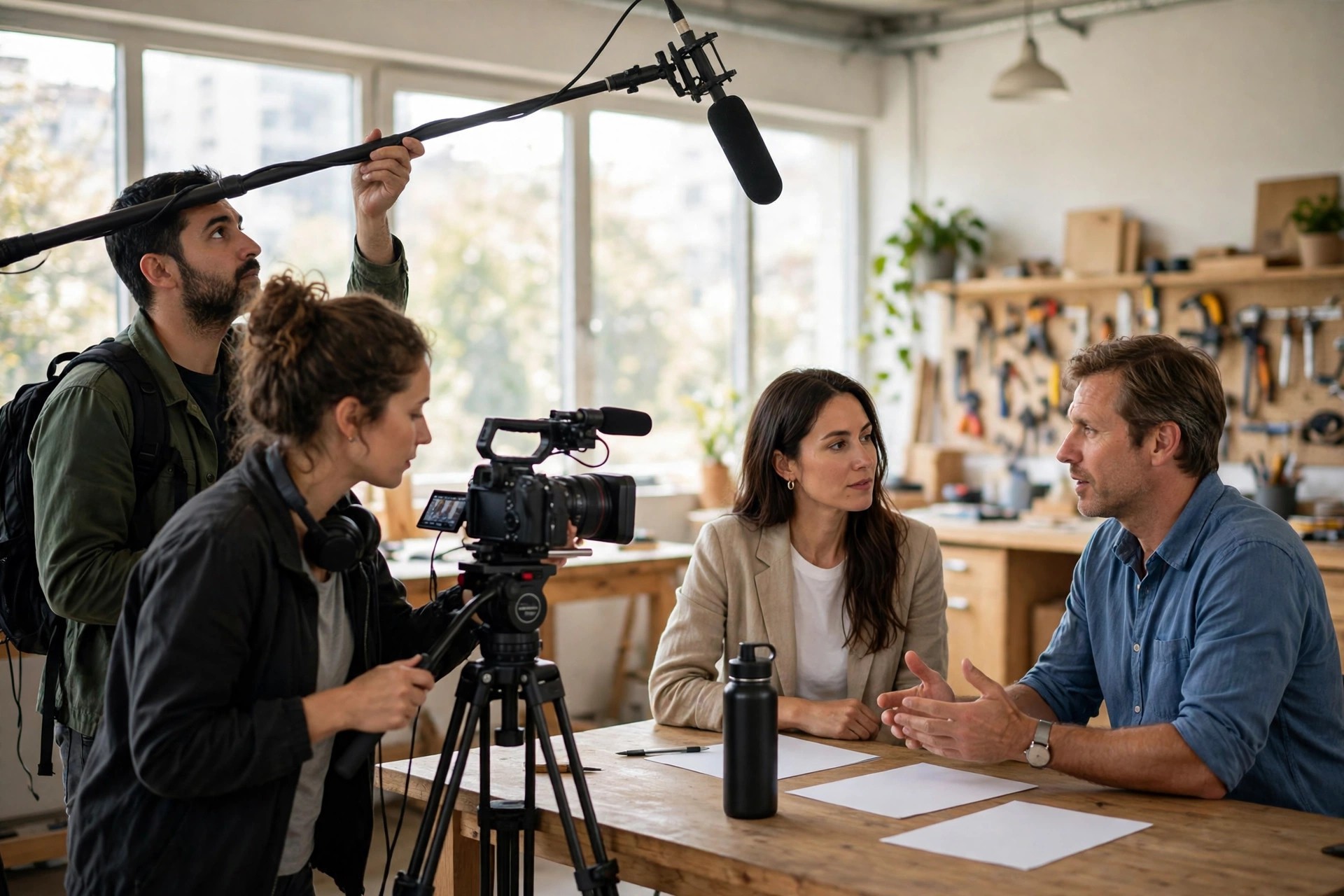
Which days should be clone days, and which days should stay real?
Our position is a split week, and we hold it even though we build clones. The clone carries the teaching days, the buyer answers, and the Friday offer, because those posts live or die on the words. You keep the real camera for proof: client stories with the client in the room, tours of your place or your work, product in your hands, and any live post where buyers watch you think.
| Post kind | Clone day | Real camera day |
|---|---|---|
| Buyer questions and teaching steps | Yes | When you want to |
| Mistakes, costs, and how things work | Yes | When you want to |
| The offer and how to start | Yes | Rarely |
| Client stories and results proof | No | Yes, always |
| Tours, product in hand, work on site | No | Yes, always |
| Live posts and live answers | No | Yes, always |
The Federal Trade Commission, in its final rule on fake reviews and testimonials announced on August 14, 2024 and in effect since October 21, 2024, bans fake or false testimonials, with fines of up to 53,088 dollars for each knowing violation. That rule is one more reason proof stays real. A clone may say what you could say yourself, with the same facts behind it, and it may never invent a client, a result, or a story.
What mistakes break a daily clone feed?
The first mistake is skipping the script read to save the hour. That hour is the whole control you hold over your own face and voice, and scripts nobody read go out with wrong prices, wrong names, and lines you would never say. When that happens twice, buyers stop trusting the feed, and the owner blames the tool for a step the owner cut.
The second mistake is posting daily with nothing behind the post. A clip that teaches well and then ends, with no path to a call, no setter watching the messages, and no one working the comments, turns views into applause and nothing else. Daily content pays when a ready viewer can book in one tap and a person or a setter picks the talk up fast.
Watch for these red flags in clone packages sold for daily posting. A seller who will not show you a full week of finished clips, only one short demo, has not proved the pace. A package with no approval step before posts go live puts words in your mouth at scale. A deal that keeps your twin locked inside the seller platform, with no way to take your own likeness with you, rents your face back to you.
Start with 30 days. Build the twin in week one, run the five slot board for three weeks, read every script, and count the calls, messages, and booked talks the feed brings in. Owners who run that test learn their real number fast, and the test costs less than one more month of a feed that goes dark every time the owner gets busy.
When you are ready to build the full flow, from daily clone content to booked calls with a setter and a closer behind it, book a Game Plan call here: https://www.settersandclosers.co/#booking
Frequently asked questions
Can you really post every day without recording?
Yes, after day one. You record one sample to build the twin, and from then on the clone films every script you approve. Most owners batch five scripts in about an hour on one day, the twin records all five clips, and the posts go out one per workday with no camera in the week at all.
How long does it take to set up an AI clone for daily content?
Most owners finish setup inside the first week. Day one is the sample recording and consent, days two and three are tests on three short scripts, and days four and five build the first week queue of five clips. Simple self serve twins can render the same day, and careful testing is what takes the week.
What do you still have to do yourself each week?
You pick the topics from real buyer questions and you read every script once, which takes most owners about an hour a week. A person also checks each finished clip, writes the post text, and works the comments. The clone removes filming, setup, and retakes, and it removes nothing that needs your judgment.
How much does daily clone content cost each month?
For 20 one minute clips a month, the platform bill lands at about 49 to 64 dollars a month on the tier that holds the credits or minutes, plus a posting tool. Done for you builds cost more up front, with agency built clones starting at about 10,000 dollars in the 2026 cost guides.
Will daily clone posts hurt trust with buyers?
For teaching and answer posts, buyers judge the answer, and a clear answer in your own face and voice holds trust well. For proof posts, trust depends on real footage, which is why client stories, tours, and results stay on a real camera. Owners who keep that split keep trust on both kinds of post.
What happens on days when you have nothing to say?
Those days are why the five slot board exists. Monday takes the top buyer question, Tuesday a process step, Wednesday a mistake, Thursday a story in words, and Friday the offer. When a week brings no new ideas, last week calls and comments hold more questions than five slots can use.
Ready to post every day without a camera in your week?
Bring your offer, your buyer questions from the last two weeks, and the platforms you post on, and we will map your first 30 days of clone content and the booking path behind it. Book your Game Plan call here: https://www.settersandclosers.co/#booking
About the author
Charley Cash is the founder of Setters and Closers Co., a sales team agency in Fort Worth, Texas. His team builds the AI Sales Loop OS for high ticket businesses: GoHighLevel systems, Meta ads, an AI appointment setter, and A-Player closers who close on Zoom. His own content runs on his AI clone, because he films nothing.
Sources
- Wyzowl, State of Video Marketing 2026, survey of 266 marketers and consumers fielded in late 2025: 91 percent of businesses use video as a marketing tool, 63 percent of video marketers use AI video tools, and 85 percent of people said a video had convinced them to buy.
- Sprout Social, 2025 Content Benchmarks Report, nearly 3 billion messages from 1 million public profiles, February 2024 to January 2025: brands post an average of 9.5 posts a day across all networks.
- Buffer, Instagram posting study, August 2025, about 2.1 million posts from about 102,000 accounts: posting 3 to 5 times a week earned about 12 percent more reach per post than 1 to 2 times, and 10 or more times earned about 24 percent more.
- HubSpot, State of Marketing Report 2026, survey of more than 3,400 marketers: marketers rank short form video first for return on investment at 49 percent, ahead of long form video at 29 percent.
- DataReportal and We Are Social, Digital 2026 Global Overview Report, published October 2025: short form video takes 58 percent of all time spent on social media.
- HeyGen, digital twin guide published October 7, 2026: a twin starts from a short recording plus a consent statement, processing usually finishes in about 10 to 15 minutes, Creator costs 29 dollars a month or 24 dollars billed yearly for 600 credits, and Avatar IV uses 31 credits a minute.
- Synthesia pricing, as read from its own pricing page in August 2026: Starter costs 29 dollars a month or 18 dollars billed yearly, and the higher tier costs 89 dollars a month or 64 dollars billed yearly.
- Federal Trade Commission, final rule on fake reviews and testimonials, announced August 14, 2024, in effect October 21, 2024: knowing violations can cost up to 53,088 dollars each.
- Setters and Closers Co. placement records: 311 businesses scaled, 22,283 booked appointments, 7,411 new clients closed, 11 million dollars cash collected.
Related posts
- What Is an AI Clone for Business Owners?
- Can an AI Clone Make Your Social Media Content?
- AI Clone for Coaches: Daily Content Without Filming
- How Much Does an AI Clone Cost?
Add Setters and Closers as a preferred source on Google and our new posts show up first for you.
[…] AI Clone for Daily Content: Post Every Day Without Recording […]
[…] AI Clone for Daily Content: Post Every Day Without Recording […]